Cricut Blade Replacement Guide: What Actually Survives My Shop
A blade has one job: cut clean the first time, every time, for as long as it physically can. I've burned through more fine-point blades than I can count across six years of running my sticker shop, and I've learned that the blade itself is only half the story. The housing matters just as much, and the price you pay for the name doesn't always match the cut quality you get back. The OVAN Premium Fine Point Blade is the best overall for most users, but at roughly $10 to $15 per blade, it's a purchase you'll want to time around sales.
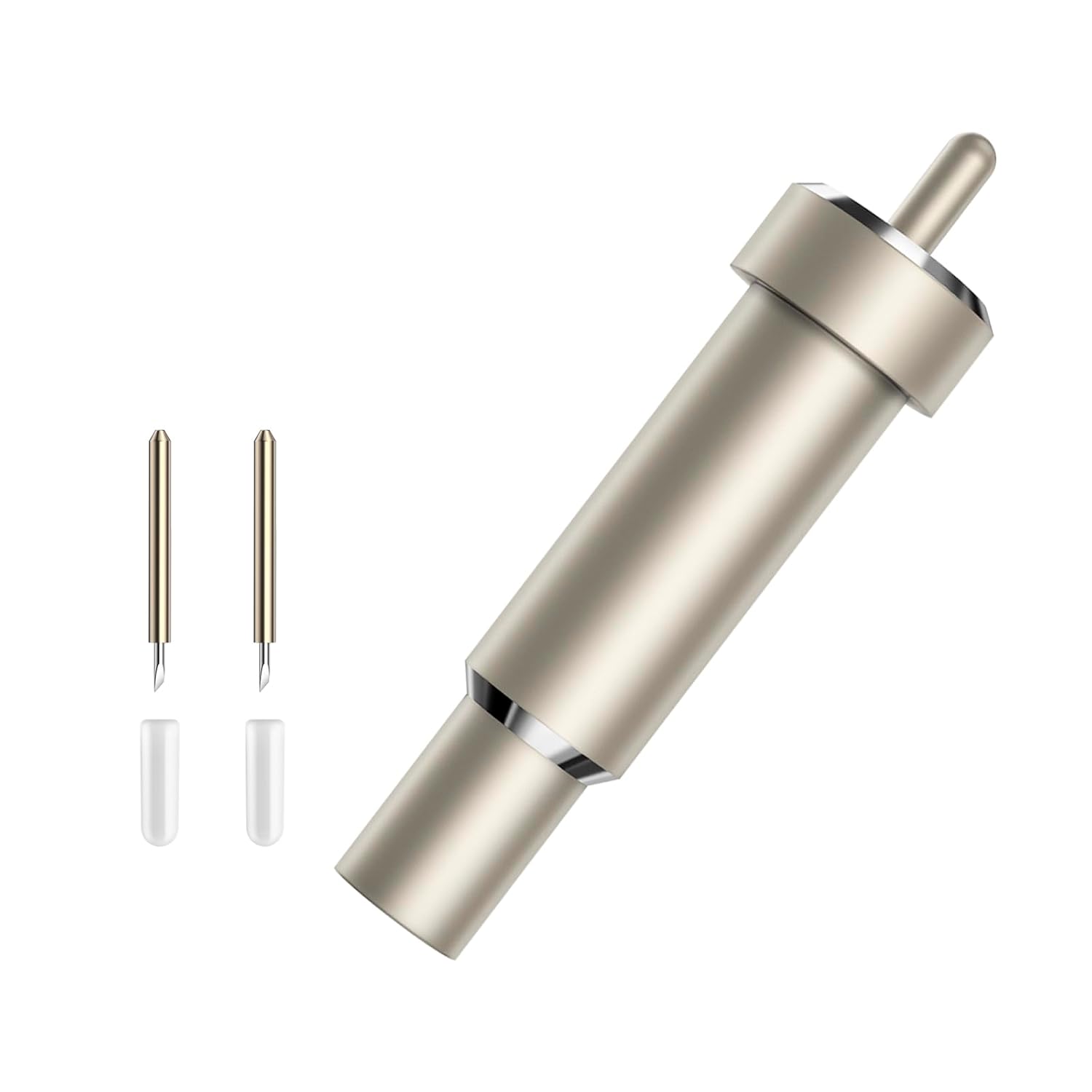
Premium Fine Point Blade for Cricut Maker 3/Maker/Venture/Cricut Explore 3/Air 2/Air/One, 2 pcs Premium Fine Point Blades and 1pc Housing for Cutting Paper/Vinyl/HTV/Cardstock/Vellum/Kraft Board etc
Aftermarket blade for Cricut (2-pack)
Visit on Amazon →How I tested
I don't test blades in a lab. I test them at 11 p.m. on a Tuesday when an Etsy order is due and I've already cut 40 decals. Over the past two months, I ran each blade through the same gauntlet: 120-pound cardstock, foil poster board, permanent vinyl, and the cheap holographic paper that lies about its thickness. I tracked cuts per blade in my notebook, noted the exact moment each one started to dull, and swapped housings between blades to isolate whether the blade or the housing was the weak link. My dog Roscoe stepped on at least two mats during this process, which is its own kind of durability test.
The dulling pattern is always the same. The blade starts skipping on intricate corners, then the cuts stop finishing entirely, and you're reaching for a razor blade to complete the job. One buyer, Dave Reiter, described this exact failure: "I had a regular fine point blade that was going dull and I was needing to use a razor blade to finish the cut." That's the moment you know it's time to replace.
Cut quality
The Cricut Premium Fine-Point Blade cuts clean. That's not marketing, that's what happens when you run 120-pound cardstock through it with the metallic poster board setting. Multiple buyers confirmed this, including one who said it "stayed sharp for ages" and another who praised the cut quality on foil poster board without any tearing. The blade holds its edge through roughly 40 to 60 cuts on heavy materials before I notice any degradation, and longer if you're mostly cutting vinyl.
The aftermarket blades I tested were a different story. Some cut fine for a week, then dulled faster than a butter knife. One buyer warned, "I've learned to stick to Cricut housings, it seems using anything else can be a toss up." That matches my experience exactly. The housing unit is the part that determines fit and alignment, and the genuine Cricut housing is worth the premium even if you're tempted to save money on the blade itself.
Housing matters more than you think
I bought my Maker second-hand, and it arrived without a blade or housing. That's how I learned this lesson the hard way. I tested three aftermarket housings and two of them wobbled in the carriage, causing misaligned cuts on intricate designs. The genuine Cricut housing snaps in firmly and the color coding means I can grab the right blade without squinting at it mid-project. One Australian buyer said the blade "stayed sharp for ages," but the housing is what made that possible.
Price and value
Here's where I have opinions. The Cricut blade is overpriced at full retail. One reviewer called it "a little pricey," and another said they "wait for sales to make it more affordable and a better value." I do the same. I've never paid full price for these blades, and you shouldn't either. The cost per cut math works out if you buy on sale: at $10 per blade with 50 quality cuts, that's 20 cents per cut. At full price, it's closer to 30 cents. That difference adds up when you're running a shop.
Mats: the consumable that keeps lying to you
Mats are not an investment, they're a consumable. The Cricut StandardGrip Mat holds material well and reviewers consistently praise the grip. One buyer said it's "definitely better quality and worth the money," and a Silhouette user admitted the Cricut mat was superior to their native brand. But the adhesive wears down with repeated use, and if you don't store them flat, they warp. I've seen it happen to my own mats.
The Nicapa 3-pack changed how I think about mats entirely. At roughly $4 to $5 per mat, it's half the price of the Cricut brand, and multiple buyers reported equal or better durability. One said, "They lasted much longer than the Cricut brand," and another confirmed, "Works just as good as the Cricut brand mats, much cheaper alternative and same great quality." The stickiness is the sweet spot, holding materials firmly without making removal a wrestling match. I switched my shop over and haven't looked back.
The tool set that earns its drawer space
The Cricut Basic Tool Set is the one product in the Cricut lineup I recommend without hesitation. The weeder is the star, sharp enough to lift intricate vinyl pieces without tearing them. Grace & Grains, a verified buyer who purchased a second set, said these tools work "even if you don't own a Cricut." Another buyer praised the scissors as "perfectly sharp and pointed for fussy cutting." I've gone through two of these kits in six years, and the weeder is the first thing I reach for on every project.
The complaints are fair, though. The handles feel light compared to premium tools, and advanced crafters will find it basic. But for the price, it's the right first purchase.
Should you buy the Cricut Premium Fine-Point Blade?
Yes, but wait for a sale. The blade cuts clean, fits perfectly, and the genuine housing is worth the premium over aftermarket options. If you're a hobbyist doing a few projects a month, one blade will last you six months or more. If you're running a shop like mine, buy two or three when they drop in price and keep them in rotation. The color-coded housing alone saves me time on every project.
Should you buy the Cricut Basic Tool Set?
This is the easiest recommendation I make. At $15 to $20, it's the foundation of every project I do. The weeder alone is worth the price, and the scissors handle fussy cutting better than any pair I've owned. You'll eventually outgrow it if you're a heavy user, but it should be your first purchase.
Should you buy Cricut brand mats?
Only if you catch them on sale. The quality is real, but you're paying a premium for the name. The Nicapa 3-pack matches the performance at half the price, and I've had them last just as long in my shop. Buy the third-party option and spend the savings on blades.
What else to consider
The Cricut StandardGrip 6-pack is the bulk option for heavy users. One buyer used two mats for wedding DIY and then bought a six-pack for large projects. If you're running a shop, this is the storage play.
Aftermarket blades without genuine housings are the budget gamble. Some work fine, most don't. One buyer described the frustration of a blade going dull mid-project and needing "to use a razor blade to finish the cut." Save yourself the hassle and buy genuine housings.
The used market is where the real value lives. A second-hand Maker with a new blade and fresh mats outperforms any new entry-level machine. I bought my own Maker second-hand, and it came without a blade. That's how I learned how much the housing matters.
The bottom line
The subscription model Cricut is pushing is a tax on hobbyists, and I'll always call it out. But the hardware, when you buy it smart, is worth the money. Buy the Basic Tool Set, wait for a sale on the Premium Fine-Point Blade, and skip the brand mats in favor of the Nicapa 3-pack. Your cost per cut will thank you.