Related: Cricut Joy 2 vs Maker 3: Which Cutter Belongs in a Small Craft Room
I have hauled a cutting machine to more craft fairs and weekend classes than I care to count, and the lesson never changes: the machine is the easy part to pack. The hard part is the bag around it. A working Cricut Joy 2 travel kit is really three decisions, the cutter, the materials you are willing to rebuy on the road, and the checked luggage that gets all of it there with the wheels still attached.
I spent six years running an Etsy sticker and vinyl shop out of a spare bedroom, and I now teach weekend classes, which means my gear lives in a car, a hotel room, and a church basement more often than it lives on a desk. I have cut through more than 200 rolls of vinyl in that time, and I keep a notebook of blade types, pressure settings, and which materials lie about their thickness. None of that makes me an expert on suitcases. It does make me very specific about what a travel bag has to do for a cutting machine.
Here is the short version. The machine rides with you, in the cabin. Mats and materials ride in the checked bag. Finished inventory gets split between the two, so a lost bag does not end your weekend.
The other thing to settle before you shop for luggage is whether the machine will earn its keep on the road. Cricut sells a machine once and a subscription forever, and the subscription is the real product. If you are cutting your own designs from your own files, you can stay on the free tier and put that money into vinyl instead. If you plan to sell at markets, do the cost per cut math before you buy a single accessory, because that number decides how much bag you can justify.
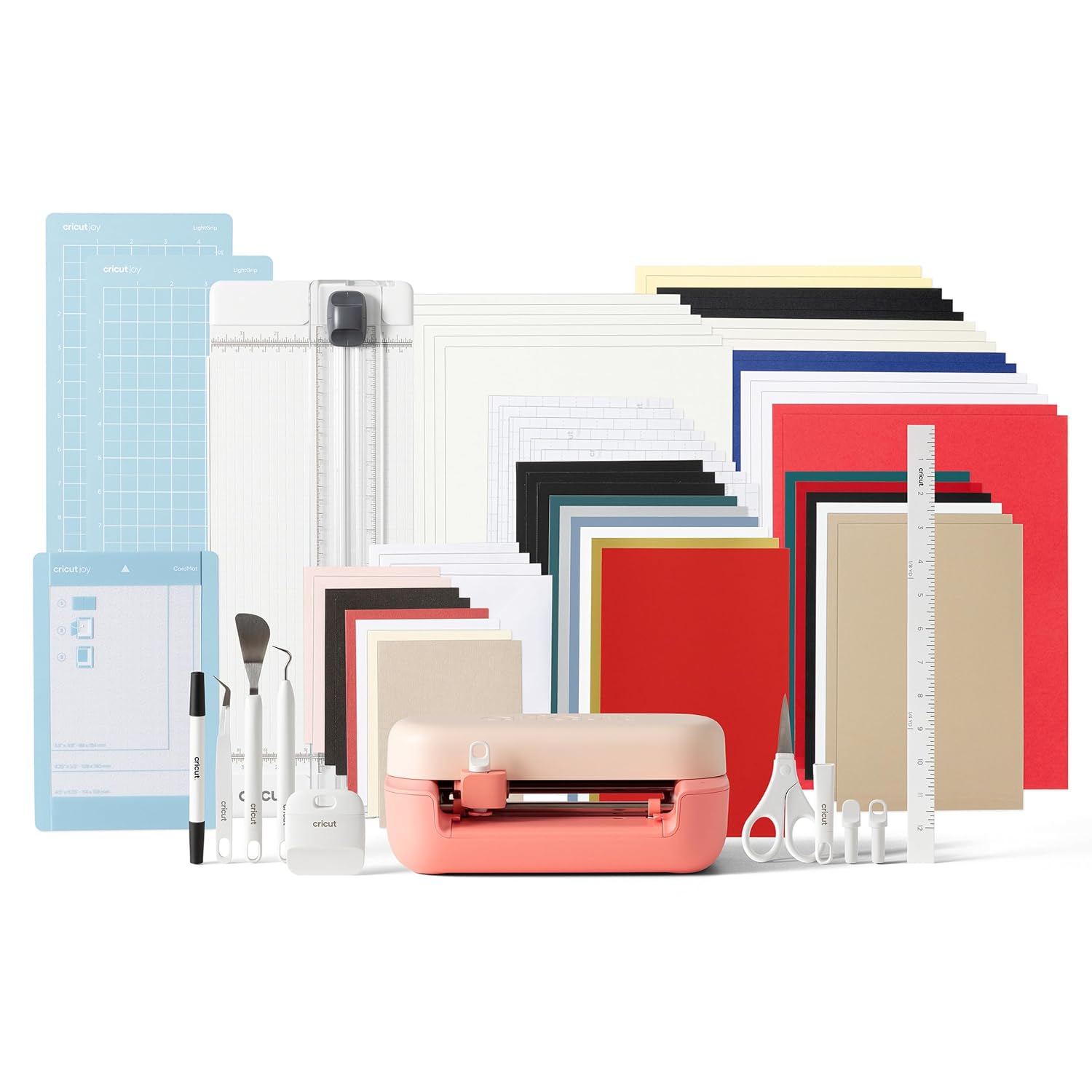
Cricut Joy 2 + Deluxe Bundle, Coral
The Joy line is the one that travels. It is the small machine in the family, it uses the narrower mats rather than the full width ones the Explore and the Maker take, and that narrow footprint is exactly why it makes sense in a bag. You are not packing a cutter. You are packing a cutter plus a laptop plus a table display, and the small one is the only version of that equation that fits.
The Deluxe Bundle version pairs the machine with extras instead of sending you back to the store the same afternoon, and coral is a color you will find in a crowded tote, which sounds silly until you have dug through a black duffel in a parking lot at 7 a.m. before a show opens.
What I care about on a machine this size is the blade housing and the mat. Blades dull faster than the packaging admits, and most so called machine problems are blade problems. Keep a spare housing in the bag and swap it the moment cuts start tearing instead of kissing cleanly. Mats are a consumable and a money pit, and the smaller Joy mats are no exception. I buy third party and I have not noticed a difference. For what the brand charges for a single branded mat, you can keep three spares in the front pocket of whatever bag you end up with.
The honest caveat: this is a small cutter, and small means small. If your product line is full size HTV shirt fronts or oversized die cut papercraft, the Joy is the wrong machine and no bundle changes that. If your line is stickers, decals, small HTV details, and class samples, it is the right one.
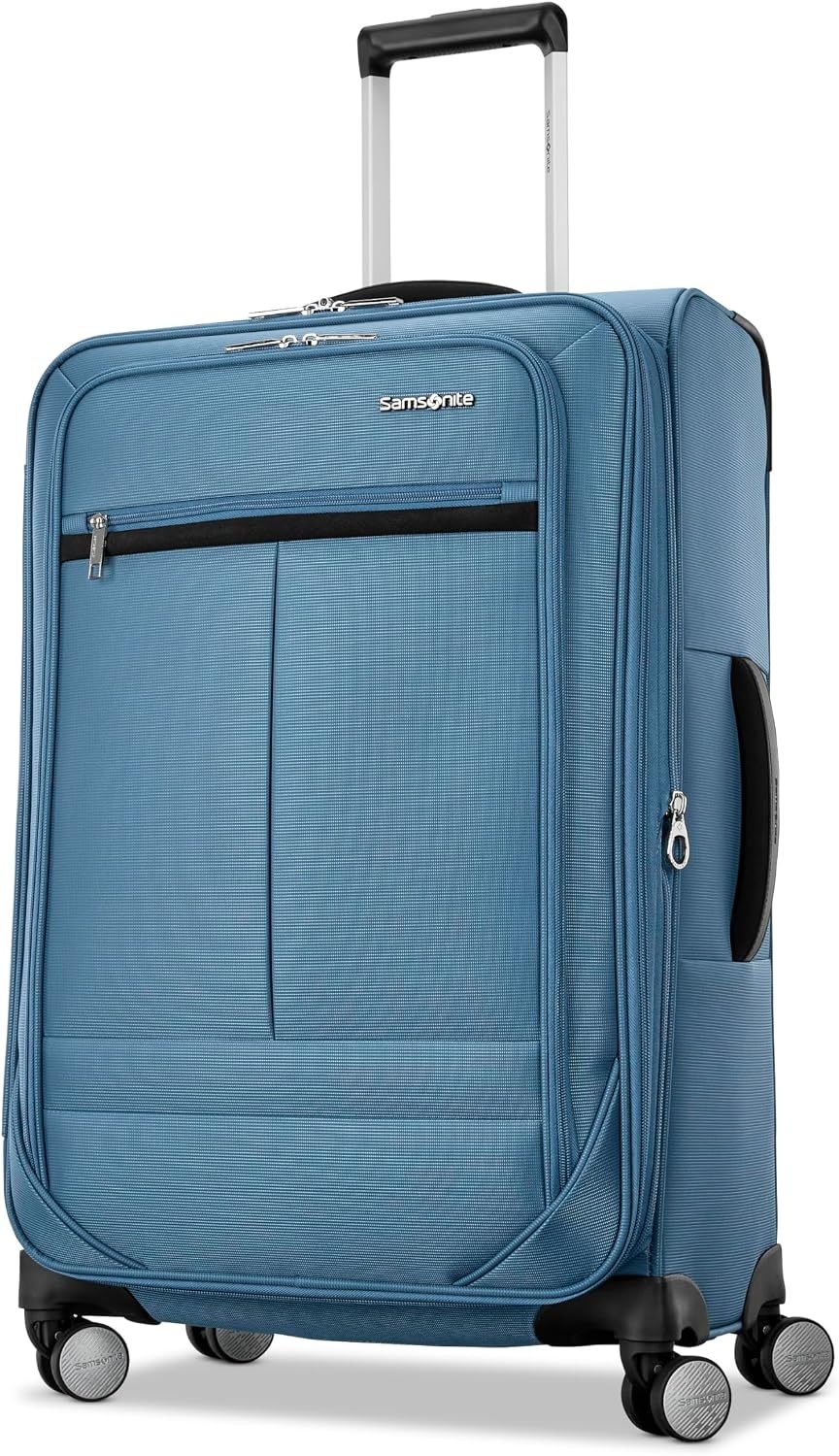
Samsonite Soft-Sided 25-Inch Medium Checked, Captains Blue
For a two or three day class trip, this is the size I would reach for first. It is a medium checked bag, it is expandable, and it is soft sided, which matters more than people admit when the thing you are packing is a boxy machine case and a stack of oddly shaped organizers.
The 360 degree spinner wheels are the part I care about most. Spinner wheels are not a luxury on a bag you are rolling through a convention hall with a table display in your other hand. The adjustable telescopic handle means you are not hunched over for the length of the hall, and the two front pockets plus the side pocket give you somewhere to put a mat sleeve, a small tool case, or the sample cards you will hand out all weekend without opening the main compartment in front of customers.
Soft sided also forgives overpacking in a way hardside does not. You can wedge a roll of HTV into a corner. You cannot wedge anything into a hard shell that has already closed.
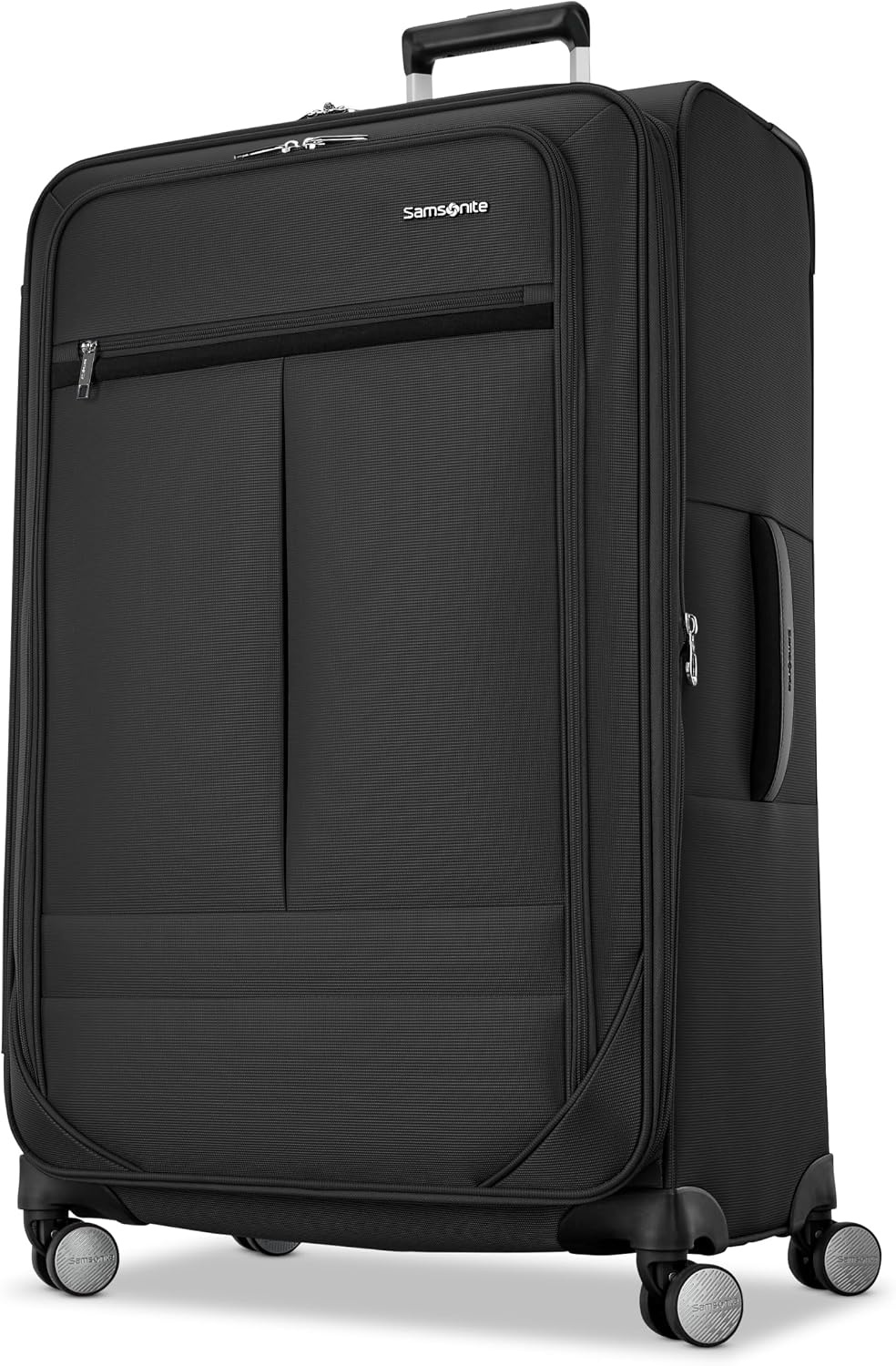
Samsonite Soft-Sided 29-Inch Large Checked, Black
This is the same bag, larger, in black. If you are doing two day markets with a full table setup, a banner, a table cover, a card reader stand, and inventory in three sizes, this is the one that keeps you from carrying a second tote on your shoulder.
The feature list is the same: durable soft sided construction, expandable, 360 degree spinner wheels, adjustable telescopic handle, two front pockets and one side pocket. The black hides loading dock scuffs in a way the lighter colors do not, which matters if you fly more than once a season.
The tradeoff is weight and maneuverability once it is full. A big soft bag packed to the top handles like a shopping cart with a bad wheel, and if you are on a train or a small regional flight, a 29 inch checked bag is more bag than you want to move by yourself. Buy this size because the booth needs it, not because the larger bag looks like better value per inch.
Amazon Basics 30" Hardside Large Checked, Rose Gold
Hardside is the opposite philosophy, and it is the right one for a specific job. This is a large checked bag, expandable for up to 15 percent more space, with a scratch resistant surface and four multi directional wheels. Rose gold is a real color choice rather than a neutral one, and that matters at a baggage carousel where twenty black bags look identical.
I recommend hardside when the bag is protecting rigid things you cannot replace on site. A hard shell does not flex around a machine case, so it will not let you cheat the way the soft sided bags will, but it also will not let a stack of vinyl get bent in half by whatever the airline stacked on top of it. If your market inventory includes framed pieces, acrylic blanks, or anything that snaps, this is the bag that gets it there in one piece.
Expandable gives you up to 15 percent more space, which is the difference between closing the bag in the hotel room and closing it in the parking lot. Scratch resistant does not mean scratch proof. Expect scuffs if you fly a few times a year, and expect this color to wear them better than a pale gray would.
How I judge travel gear for a craft setup
I do not test suitcases the way I test cutters, and I am not going to pretend otherwise. What I do is run the same three questions against every bag I consider.
First, can it move on four wheels while one hand is full? Spinner wheels are the single feature that decides whether a market morning is annoying or unbearable. Second, does it forgive a weird load? Soft sided expandable bags forgive. Hardside bags protect. You have to pick which failure you would rather live with. Third, does it have pockets you will actually use? Two front pockets and a side pocket is not marketing filler. That is where the mat, the spare blade housing, and the business cards live, so you are not unpacking the whole bag at the booth while a customer waits.
On the machine side I judge differently, because I have cut enough to have a notebook full of opinions. Blade life in actual cuts, not in packaging claims. Pressure settings that hold across a whole roll of the same vinyl instead of drifting halfway through. Whether the software stays out of my way while I am working. That last one is where Cricut consistently loses points, and it has nothing to do with hardware.
Analysis: what actually matters
The machine is the cheap part. That is the thing to internalize before you buy anything else in this article.
A Cricut sells once. Design Space is the product that keeps billing, and the accessory aisle is where the margin lives. Mats, blades, and materials are all priced for convenience, and every one of them has a third party equivalent that works. When I teach the Etsy course, the first exercise is cost per cut: material, blade life, mat life, and the subscription divided across the number of items you actually sell. Most people are surprised by how much of their margin goes to consumables they never counted.
That math changes what you should buy. If you are cutting fifty stickers a year, buy the cheapest machine that does the job and never open the paid tier. If you are cutting for markets, the machine is a business expense and the bag is a business expense, and both should be sized to the number of trips you actually take this year.
What does not change is the packing order. Machine and blades with you. Mats and material checked. Finished inventory split between the two, so one lost bag does not end your weekend. I have watched a vendor at a two day show sell nothing on Saturday because her entire display was in a bag that went to the wrong city.
The last thing worth saying out loud: none of these bags are Cricut products, and none of them need to be. Tools that only work with brand materials are a tax, and that applies to luggage the same way it applies to mats. A suitcase is a suitcase. Buy the one that moves well, packs odd shapes, and survives the loading dock.
The craft fair packing reference table
This is the table I keep in my phone before a show weekend. The first column is what goes in the bag. The rest is what it is for and what to remember. Check current Amazon price before you buy anything, because these move.
| Gear | Best for | What the listing gives you | Notes |
|---|---|---|---|
 Visit on Amazon → Visit on Amazon →Cricut Joy 2 + Deluxe Bundle |
Cutting on the road | Small machine, coral bundle | Rides in the cabin, not the checked bag |
 Visit on Amazon → Visit on Amazon →Samsonite 25-Inch Medium Checked |
Two to three day class trips | Soft sided, expandable, 360 degree spinner wheels, adjustable telescopic handle, 2 front pockets and 1 side pocket, Captains Blue | Flexes around a boxy machine case |
 Visit on Amazon → Visit on Amazon →Samsonite 29-Inch Large Checked |
Two day markets with a full table setup | Same feature list, Black | Heaviest load, best for booth gear and displays |
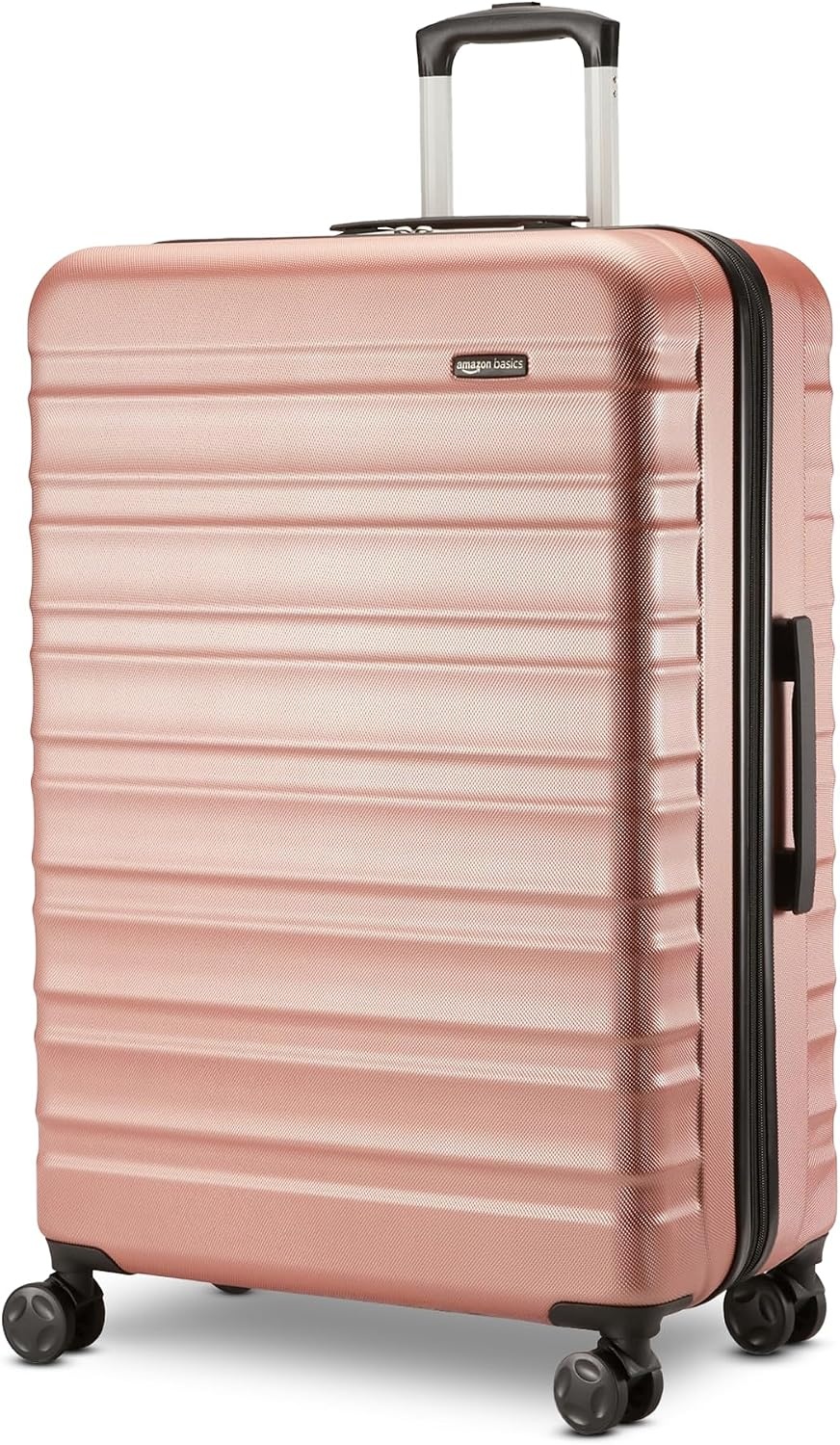 Visit on Amazon → Visit on Amazon →Amazon Basics 30-Inch Hardside |
Rigid gear you cannot replace on site | Expandable up to 15 percent more space, scratch resistant surface, four multi directional wheels, Rose Gold | Protects, does not flex, easy to spot on the carousel |
The table is not a packing list, it is a decision list. One machine, three bags, and the only question that matters is how much booth you are bringing and whether the airline is going to stack something on top of it. Everything else is noise.
Should you buy the Cricut Joy 2 + Deluxe Bundle?
Yes, if the machine matches the work. It is the smallest cutter in the lineup, it uses the narrower mats, and it is the one that fits in a tote next to a laptop. The bundle means you are not making a second trip for the basics, and coral is easier to spot than another white box on a table.
If your products are big HTV panels or oversized papercraft, no. But for stickers, decals, small details, and class samples, this is the machine that travels, and it is the one I would hand a beginner who plans to sell at markets. Keep a spare blade housing in the bag, buy your mats from somebody other than the brand, and do not let a subscription pop up in the middle of a project weekend.
Should you buy the Samsonite 29-Inch Large Checked?
Buy it if the booth is the reason you are traveling. The 360 degree spinner wheels and the adjustable telescopic handle are the two features that make a loaded bag manageable in a convention hall, and the soft sides let you wedge in the odd shapes a craft table produces. The front pockets hold the small stuff you need at arm's reach.
If your trips are shorter, the 25 inch version does the same job with less bag to drag. If your gear is rigid and expensive, the hardside Amazon Basics bag is the better call because it will not bend your stock. Check current Amazon price on whichever one you are considering, and size the bag to the number of shows you actually booked, not the number you hope to book.