Related: Best Cricut Machine for Beginners: What to Buy Before You Subscribe
I ran a sticker and vinyl shop out of my kitchen for six years before teaching craft classes turned into the day job. In that time I learned that the machine is the cheap part. The mats, the blades, the vinyl, and the subscription are where the money actually goes. So when a reader asks me whether the Cricut Maker 4 bundle is the right first purchase, I answer a different question first: what are you going to cut, and how often?
That is the frame for this guide. I own an old Explore and a Maker 3, I keep a borrowed competitor unit around for comparison, and I keep a notebook of blade types, pressure settings, and which materials lie about their thickness. I am not here to tell you the Maker 4 will change your life. I am here to tell you who should buy the Cricut Maker 4 bundle, who should buy the cheapest machine in the lineup and stop there, and what the scoring stylus and the two hard cases in this roundup actually solve.
One housekeeping note before the details: nothing here depends on a sale price. Prices move, bundles change, and the math that matters is cost per cut over a year, not the number on a product page today. Check current Amazon price when you are ready to buy, then decide whether the subscription belongs in your plan at all.
The machine: Cricut Maker 4 Vinyl Cutting Bundle
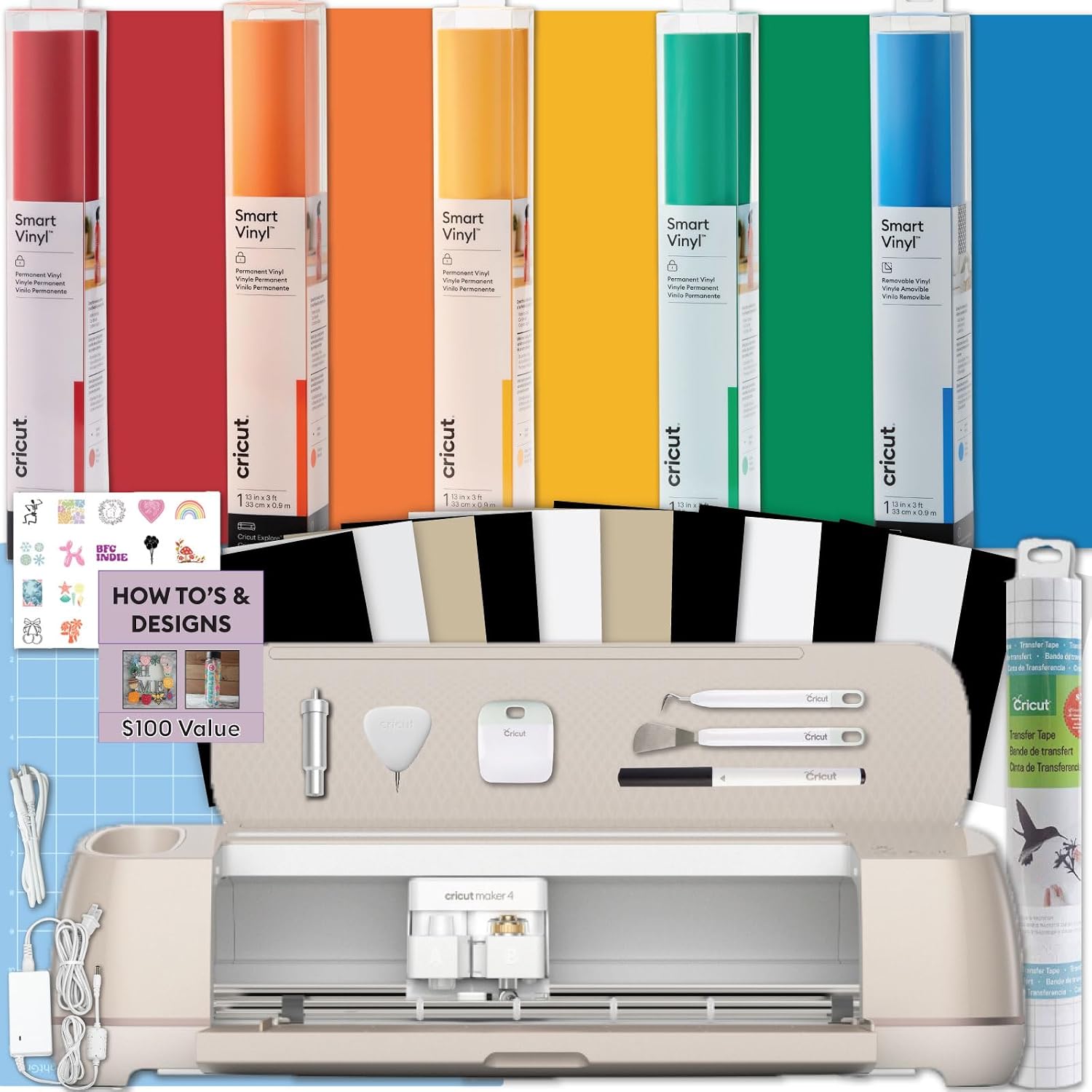
This bundle is the machine plus rainbow Smart Adhesive Vinyl rolls and a set of tools, and that combination matters more than it sounds. Half the people who buy a cutter for the first time end up with a machine, no vinyl, no weeding tool, and a weekend of waiting on a second order before they can make anything. The bundle removes that step. You can cut decals and labels the day it lands, and you learn whether you actually enjoy weeding before you spend another dollar.
The Maker line is the part of Cricut's catalog I defend without rolling my eyes. The extra tool capacity is real, and it is aimed at people who already know they want to work with heavier materials than paper and adhesive vinyl. That is the whole test. If you know which tool you want next and why, the Maker name earns its price. If you are buying it because it is the most expensive option and expensive sounds safer, you are paying for capability you will never load into the housing.
For adhesive vinyl on tumblers and HTV on shirts, the Explore does the same job for less money, and nobody looking at your finished shirt can tell which machine cut it. I say that as someone who owns two machines above that tier.
Two costs to plan for. First, blades dull faster than the packaging admits, and a dull blade cuts like a machine fault, so budget replacements from month one and stop blaming the machine. Second, Design Space is the real product. The cutter works without the paid tier, but the pop-ups will find you mid-project, and the pull toward subscribing is the actual recurring cost of this hobby. If you cut fifty stickers a year, stay on the free tier and do not apologize for it. Check current Amazon price before you commit, and compare it against the machine-only listing to see what the extras are really costing you.
The add-on: Cricut Scoring Stylus, Lilac
A scoring stylus does one job: it presses a crease into cardstock so the fold bends cleanly instead of cracking the coating. If you make cards, boxes, envelopes, or gift tags, that crease is the difference between a project that looks handmade and one that looks homemade in the bad way. Cracked folds are the single most common reason a beginner's card looks like a beginner's card.
This is the cheapest tool in this guide and the one I would add first if paper is your material. It is also the accessory most people skip, because a fold feels like something you can handle with a bone folder and a ruler. You can. It takes longer, it is less consistent, and after you have scored fifty card bases by hand you will understand exactly why the tool exists.
The lilac color is just the color. It has no effect on the crease, and it does not change which side of the cardstock you score. Fold along the scored line with the score on the outside of the fold, press the crease flat, and you get an edge that looks like it came out of a print shop. If your projects never touch paper, this is the one product in this guide you can skip without a second thought. Check current Amazon price, and remember it is a tool, not a subscription, so it is a one-time cost against every card you make after it.
The workhorse case: Samsonite Omni 2 28-Inch Large Checked
Here is where the guide turns practical. Once you start selling at markets or teaching weekend classes, the problem stops being the cutting and starts being the moving. Vinyl rolls crush. Mats warp. Display props arrive bent. A soft duffel is a terrible way to carry a hobby that depends on flat, unbent materials, which is why a hard-side checked case belongs in this conversation.
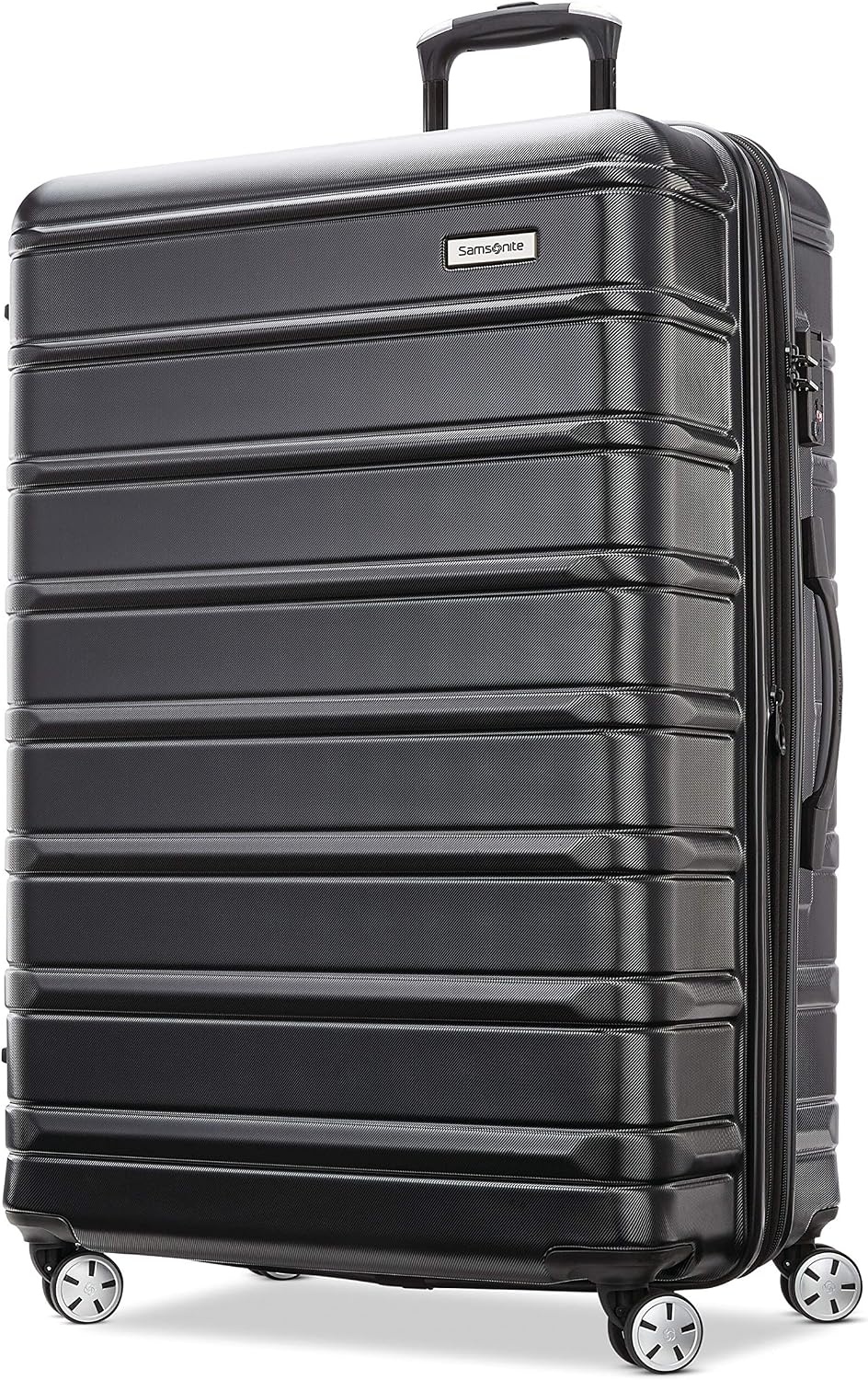
The Omni 2 is a 28-inch hardside with a scratch-resistant polycarbonate shell, 360 degree spinner wheels, a TSA lock, and an expandable body. For a crafter, the expandable shell is the feature that matters most, because the last market of the season is always the one where you sold more than you planned and need the extra inch for the leftovers. The spinner wheels matter when the case is heavy, and a case full of vinyl is heavy.
Keep the cutting machine itself in a carry-on if you fly. A checked bag gets thrown, and no hard shell makes a precision tool happy about it. Use this case for inventory, mats, display props, and rolls of HTV, and measure your longest mat against the interior before you commit. Check current Amazon price and compare it against whatever soft bag you were planning to use. The difference is smaller than the cost of replacing one warped mat.
The upgrade case: TUMI 19 Degree Large Expandable Checked
The 19 Degree Large Expandable is the same job at a completely different price point. It is a hard-side checked case in black with an expandable body, and it is built for people who are on the road constantly rather than twice a season. If you travel for classes most weekends, or if the case has to pull double duty as your personal luggage, this is the tier where the spending makes sense.
For most crafters, it does not. Two markets a year does not justify the upgrade, and the Samsonite protects a box of cardstock just as well. The honest answer is that this case is for the seller whose booth fee already assumes travel, and for the person who wants one bag that handles both the inventory and the clothes. If that is not you, put the difference into blades, mats, and vinyl, where it will actually show up in your work.
Same rule applies here as above: machine in the carry-on, materials in the checked case, and measure before you buy. Check current Amazon price and decide whether the case is a business expense or a want. Both are fine reasons. Just do not pretend a nicer suitcase will make you sell more cards.
How I judge gear like this
I do not score craft gear on specs I cannot verify or on how it looks on a shelf. I score it on four questions.
Does it remove a step I would otherwise do by hand? The scoring stylus does, which is why it ranks high here despite being the cheapest item. Does it solve a problem I already have, or one I am inventing to justify a purchase? The Maker is a yes for people cutting heavier materials and a no for people cutting vinyl. Does it lock me into brand-only supplies? That is the question I ask about every accessory, and it is why I buy third-party mats and blades. And finally, what does it cost per cut over a year? A cheap tool that saves a step beats an expensive machine that sits under a dust cover.
Blade life runs underneath all of it. Most "machine problems" I hear about are blade problems, and a new blade fixes a shocking number of complaints. Mats are a consumable, and I buy the cheap ones because the stickiness fades on the expensive ones just as fast. The subscription is the only recurring line item here, and it is the one I would cut first if the budget gets tight.
What the details actually mean
The bundle math is the first thing to understand. A bundle that includes vinyl and tools is worth it only if you would have bought those items anyway. If you already own a weeding tool and a stash of vinyl, price the machine on its own and put the difference toward blades.
The stylus math is simpler. It is a one-time purchase that improves every paper project you make afterward, and it is the cheapest way to make beginner work look less like beginner work. If paper is not your material, it is dead weight.
The case math is about what you are protecting. Hard shells, spinner wheels, and expandable bodies are all travel features, not crafting features, and they only pay off if the gear leaves your house. If your machine lives on a desk and your inventory ships in boxes, skip both cases and spend the money on materials.
And then there is the pattern I keep watching. Cricut will push the subscription harder, and the next machine release will be a minor hardware bump with a software gate attached. Third-party mats and blades will keep improving until the brand tries to lock them out. The resale market for used Makers stays strong, which is the real value play for anyone who is not sure how deep into this hobby they are going.
The buying and packing chart
This is the short version I hand to students, with the same reasoning I use in my own shop. Prices move constantly, so check current Amazon price before you buy anything here.
| Item | Role in the kit | Buy it if | Notes |
|---|---|---|---|
 Visit on Amazon → Cricut Maker 4 Vinyl Cutting Bundle |
The machine, plus vinyl and tools to start | You are starting from nothing and want the heavier tool ecosystem later | Check current Amazon price; budget for replacement blades |
 Visit on Amazon → Cricut Scoring Stylus, Lilac |
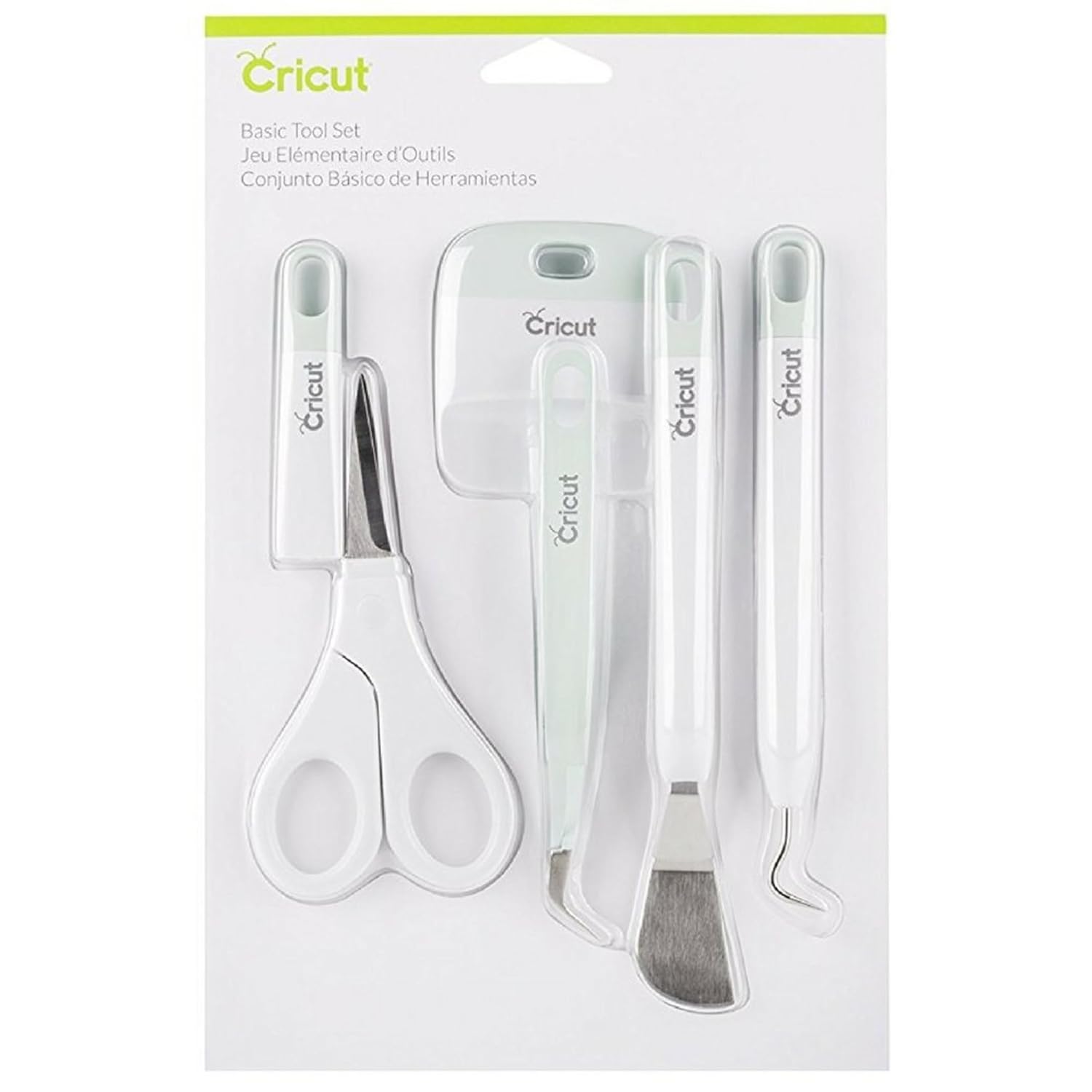
Crisp fold lines on cardstock | You make cards, boxes, envelopes, or tags | Check current Amazon price; cheapest upgrade in this guide |
 Visit on Amazon → Samsonite Omni 2 28-Inch Large Checked |
Checked case for inventory, mats, and props | You work a few markets or classes a year | Check current Amazon price; keep the machine in a carry-on |
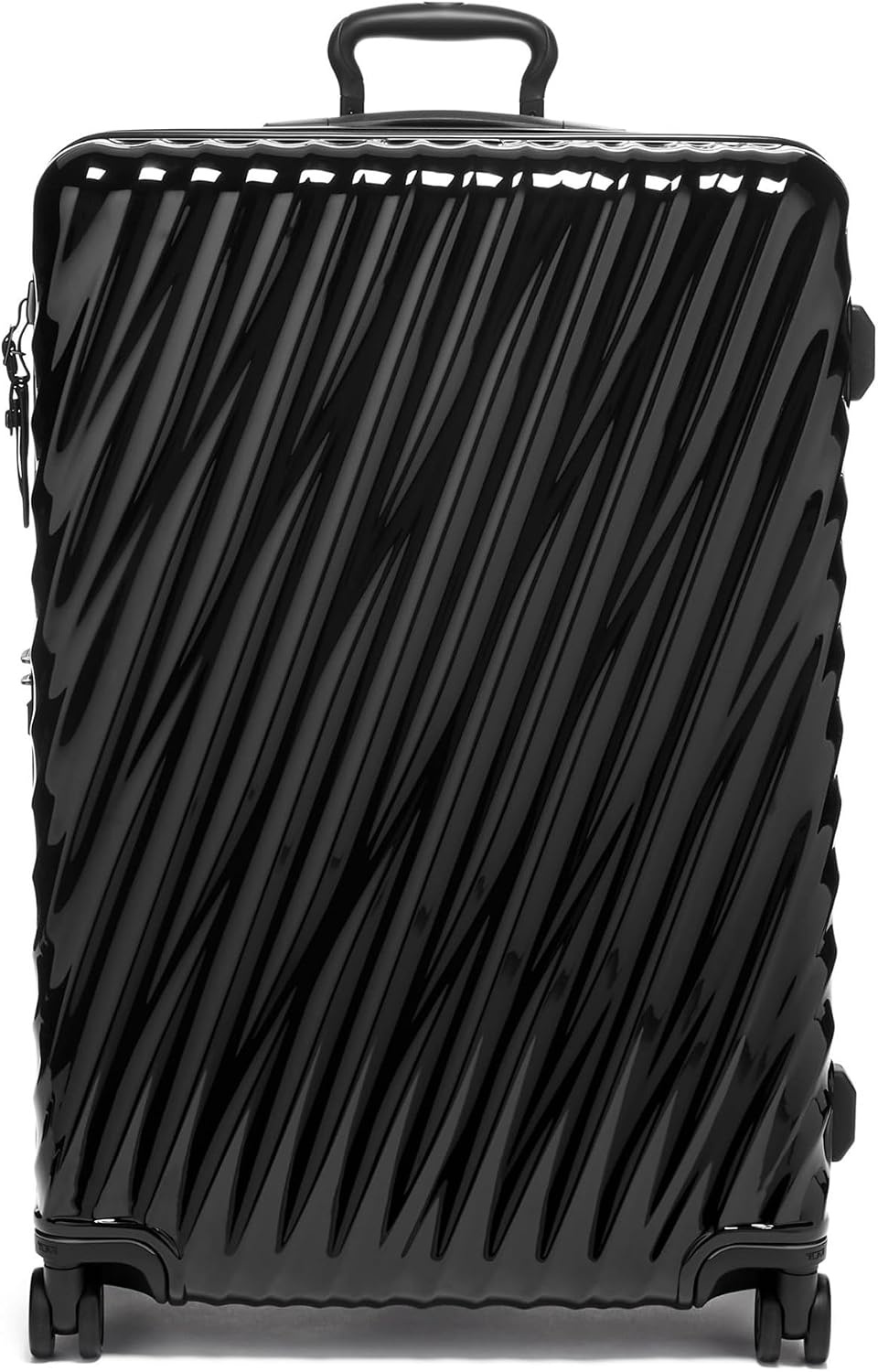 Visit on Amazon → TUMI 19 Degree Large Expandable Checked |
The upgrade case for constant travel | The case doubles as personal luggage and you are on the road often | Check current Amazon price; measure before you commit |
| Third-party standard-grip mats | The consumable you will rebuy most | Always | Stickiness fades after a handful of cuts; buy cheap |
| Replacement blades | Where most machine problems actually live | Your cuts start tearing instead of slicing | Dull blades look like machine faults |
Should you buy the Cricut Maker 4 Vinyl Cutting Bundle?
Yes, if you are starting from nothing and you know you want the Maker tool ecosystem later. The bundle covers the first weekend instead of leaving you waiting on a second order, and the machine itself is the part of this hobby that holds its value.
If you are cutting adhesive vinyl and HTV only, buy the cheaper machine and put the difference into materials. Nobody can tell which cutter made a finished shirt. And whatever you choose, plan for blades and treat the subscription as optional until you actually hit its limits.
Should you buy the Cricut Scoring Stylus?
Yes, if paper is your material. It is the cheapest item here, it fixes the most visible beginner flaw in card making, and it does not care whose cardstock you feed it. If you make cards for a living or for fun, this is a one-time purchase that improves everything after it.
If you never touch cardstock, skip it. There is no version of vinyl work where a scoring stylus earns its spot in the drawer.
Should you buy the Samsonite Omni 2?
Yes, if you are hauling inventory and display props to markets or classes. The hard shell, spinner wheels, TSA lock, and expandable body are exactly the features a crafter needs once the gear leaves the house, and it protects flat materials the way a soft bag cannot.
If your machine never leaves the desk and your orders ship in boxes, skip it. The money is better spent on mats and blades.
Should you buy the TUMI 19 Degree?
Only if travel is constant and the case has to double as your personal luggage. It does the same job as the Samsonite at a different price point, and for two markets a year, that price point is hard to justify.
For everyone else, the value pick does the protecting, and the difference goes into the supplies that actually show up in your finished work.