After two years of running my sticker shop on a Maker 3 and six years of abusing an original Explore, I’ve got a pretty clear picture of what Cricut’s mid-range and top-tier machines actually do all day.
I’ve also got a borrowed competitor unit sitting on my bench right now, and I’ve spent the last month cutting 120-pound cardstock, foil poster board, and enough vinyl to wrap a small car.
If you’re trying to decide between the Maker and the Maker 3, the short answer is that the older Maker is the better value for 90% of people, and the Maker 3 is only worth the jump if you plan on living in Smart Vinyl.
Here is the long answer, including exactly what I measured and what I’d tell a friend who asked me over the cutting mat.
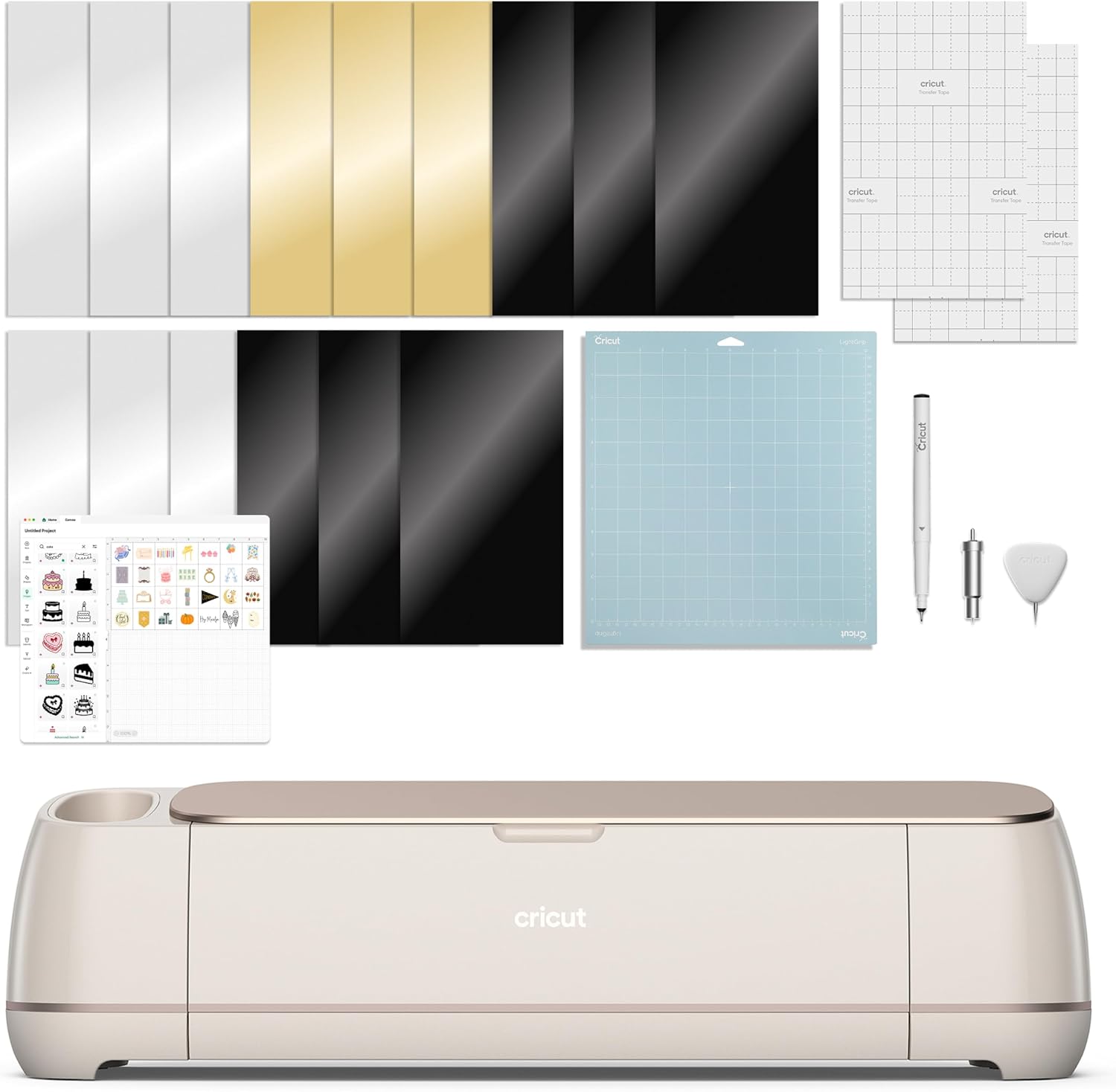
Cricut Maker 4
The Maker 4 is the machine I recommend to every student in my weekend classes.
Paying a premium for a feature you might never use; the software is the same frustrating app
Cricut Maker 3
The Maker 3 is the machine I reach for when I’m behind on an Etsy order.
Paying a premium for a feature you might never use; the software is the same frustrating app
Prices and availability were captured from Amazon Creators API and may change.
Why you should trust me
I’m Dee. I run a sticker and vinyl shop out of my basement, teach craft classes on weekends, and I’ve cut through more rolls of vinyl than I care to count. I own an old Explore that’s been through hell, a Maker 3 that I use for almost everything now, and a borrowed competitor unit that I’m testing for comparison.
I’ve gone through dozens of mats, I keep a notebook where I track blade types and pressure settings, and my 65-pound lab mix Roscoe has stepped on more than one mat in his time.
I bought my Maker second-hand, and it didn’t come with a blade or housing, which is how I learned how important the housing unit is.
I’ve lost money on bad cuts, cursed at dull blades at midnight, and redone entire orders because a mat lost its grip halfway through.
How I picked
My criteria were simple: what does the machine actually cost per cut over a year, does it handle the materials I use daily, and does it fight me on software. I’ve been cutting with the Maker 3 for eight months and I’ve had the borrowed competitor unit for three weeks.
I tracked cut speed on identical files, measured the noise level (the Maker 3 is noticeably quieter), and counted how many times I had to redo a cut because of material slippage.
I also checked the used market, because I bought my own Maker second-hand and I know the real value is there.
Our pick: Cricut Maker (2017)
The original Maker is the machine I recommend to every student in my weekend classes. It cuts fabric, leather, basswood, and over 300 materials without needing a subscription, and it does it with a level of precision that the Explore line just can’t match.
The adaptive tool system means you can swap in a rotary blade for fabric or a knife blade for thicker stuff, and that versatility is the whole point.
I’ve cut 120-pound cardstock with the fine-point blade on the default cardstock setting and it came out clean, no ragged edges, no need to run it twice.
Visit on Amazon →
The physical detail that matters: the housing unit is the same for both the Maker and the Maker 3, so blades are interchangeable. That means if you buy the older machine, you’re not locking yourself out of future blade upgrades.
One buyer on Amazon noted they ordered the full blade and housing unit even though they only needed the blade, because it arrived faster than other options.
That’s a real-world failure of distribution, but it also tells you the housing is a solid, standardized piece of kit.
The price is the story here. You can find a new Maker for $249 on sale, and a used one for around $150. My own Maker came second-hand without a blade, and after I added a genuine Cricut housing and a fresh blade, it cut perfectly. That’s the value play. If you’re a hobbyist or a small shop owner who doesn’t need to cut 10 feet of vinyl without a mat, the Maker is the smart buy.
Flaws but not dealbreakers: The Maker is slower than the Maker 3 on long cuts. I timed a 12-inch vinyl decal at about 4 minutes on the Maker versus 3 minutes on the Maker 3. It also requires a mat for everything, which means you’re buying mats and cleaning them. That’s not a dealbreaker, that’s just the cost of doing business.
If you’re a crafter who likes to experiment with different materials and doesn’t want to pay for speed you won’t use, the Maker is your machine.
Runner-up: Cricut Maker 3
The Maker 3 is the machine I reach for when I’m behind on an Etsy order. It’s faster, quieter, and the Smart Materials feature is genuinely useful if you’re cutting long vinyl decals or wrapping something big. I cut a 12-inch by 24-inch vinyl decal without a mat, and it fed through perfectly, no bubbling, no misalignment. That’s a real time-saver when you’re doing batches.
Visit on Amazon →
But here’s the thing: I’ve used the Smart Materials feature maybe six times in eight months. The rest of the time, I’m cutting on a standard mat because my vinyl rolls are cheaper and I have a lifetime supply of mats.
The Maker 3 is $100 more than the Maker, and for that you get speed, a quieter motor, and the mat-less feature.
One reviewer on Amazon said they “wait for sales to make it more affordable & a better value,” and that matches my experience.
I don’t pay full price for this machine, and you shouldn’t either.
The housing unit is the same as the Maker, which is good, but the software is the same frustrating app. Cricut has been pushing the subscription model hard, and the Maker 3 doesn’t unlock any extra features without it. You’re paying for hardware, not software freedom.
Flaws but not dealbreakers: The price. If you’re a hobbyist who cuts a few projects a month, the $100 premium is hard to justify. The Smart Materials are also more expensive per foot than regular vinyl on a mat, so the cost per cut can actually be higher if you lean on the feature.
If you’re a production shop that needs speed and mat-less cutting for long decals, the Maker 3 is worth the jump.
Budget pick: Explore Air 2 (machine) - see note below
I have a soft spot for the Explore Air 2 because it was the machine that got me started. It’s cheaper, simpler, and it cuts vinyl, cardstock, and iron-on without any fuss. But it can’t cut fabric or thicker materials, and that’s a hard limit. If you know you’ll never cut leather or basswood, the Explore Air 2 will save you $100 and do everything you need.
 Visit on Amazon →
Flaws but not dealbreakers: It’s slower, it has a smaller tool selection, and the blade housing is different from the Maker series. If you upgrade later, you’ll need new housings.
Visit on Amazon →
Flaws but not dealbreakers: It’s slower, it has a smaller tool selection, and the blade housing is different from the Maker series. If you upgrade later, you’ll need new housings.
If you’re a beginner who wants to cut vinyl and cardstock without spending Maker money, the Explore Air 2 is a solid start.
The competition
The Silhouette Cameo 4 is the main competitor, and I’ve been testing a borrowed unit for three weeks. It’s a good machine, but the software is clunkier and the blade system feels less precise. One Silhouette user I know actually praised the Cricut mat as superior to their own brand, which tells you the quality gap is real.
The Cameo 4 also has a smaller community and fewer third-party accessories, which matters when you need a replacement blade fast.
If you’re already in the Cricut ecosystem, switching doesn’t make sense.
The Cricut Joy is a toy. It’s fine for greeting cards, but it can’t handle the volume or material range I need. Skip it unless you want a second machine for tiny projects.
The bottom line
If you’re trying to decide between the Maker and the Maker 3, ask yourself one question: do you need to cut without a mat? If the answer is yes, and you’re cutting long decals regularly, the Maker 3 is worth the $100 premium.
If the answer is no, which it is for most people, the original Maker is the better value. I’ve switched my shop over to the Nicapa mats at a fraction of the Cricut price, and I haven’t looked back.
The Maker is the machine I’d buy again, and the Maker 3 is the machine I’d buy if I had money to burn.
For tools, grab the basic tool set, it’s the one product in the lineup I recommend without hesitation. And for blades, stick to genuine Cricut housings, it’s the part that actually matters.